A Great Seating Plan Begins with a Good Conversation
By Seda Dürer
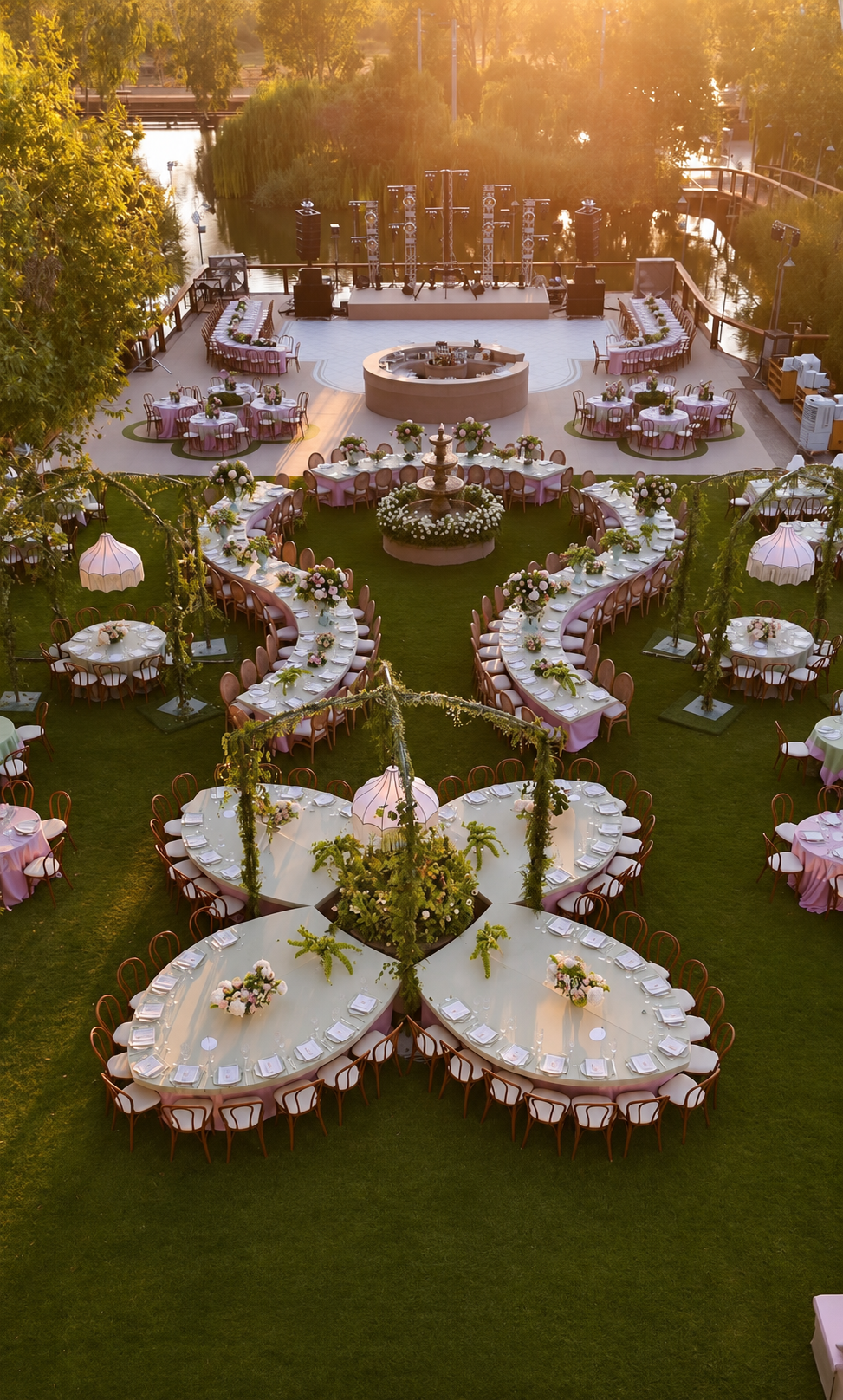
Keep Families and Close Friends Within Reach;
At a wedding, familiar faces help guests settle into the evening. Seating families and close friends together, or at neighbouring tables, gives people a sense of belonging and allows conversation to begin naturally.
When a larger group needs to be divided across several tables, proximity matters. Placing those tables near one another preserves the feeling of celebrating together. Splitting a close group between opposite ends of the room can make the arrangement feel disconnected.
Family relationships, however, cannot be understood from surnames alone. That requires a conversation.
Understand Sensitive Relationships Before Assigning Seats;
Before finalising a wedding seating plan, I speak privately with the couple about relationships that need consideration. There may be separated parents, unresolved disagreements, former partners, or guests who would feel uncomfortable sharing a table.
These details should be handled discreetly. The purpose is to create a setting in which everyone can enjoy the celebration without unnecessary tension.
Sometimes separate tables are enough. In other cases, it helps to avoid neighbouring tables or direct sightlines. The right arrangement depends on the people involved.
A wedding is rarely the right occasion to attempt a reconciliation through assigned seating. Giving guests a comfortable amount of space is often the more considerate choice.
Consider Age, Energy, and Shared Interests;
Age can offer useful guidance, but it should never be the only consideration. Two guests of the same age may want very different evenings. One may spend every available moment on the dance floor; the other may prefer a long conversation over dinner.
I also consider personalities, shared interests, languages, and how guests are likely to participate in the celebration. Lively groups may enjoy being closer to the dance floor, while those who prefer conversation may appreciate a quieter position.
Introducing guests who have never met can lead to wonderful connections. A shared interest or a welcoming mutual friend can give the conversation a natural starting point. Someone attending alone deserves particular care: their place should feel considered, with people who will include them.
Treat Sound as Part of the Seating Plan;
A clear view of the stage does not automatically make a seat comfortable.
Speaker positions and the direction of sound should be reviewed alongside the table layout. Older guests, people with hearing difficulties, and anyone sensitive to loud sound may need a position away from speakers and areas where the music is most intense.
A quieter table should still feel connected to the celebration. Guests should be able to see the couple, follow the speeches, and enjoy the atmosphere without feeling removed from the evening.
Access matters just as much. Clear routes, sufficient space between chairs, proximity to washrooms, and step-free access can make a meaningful difference to a guest’s comfort.
Apply the Same Care to Corporate Events;
At a corporate dinner, seating influences who speaks to whom, which introductions happen naturally, and whether the evening supports its intended purpose.
For guests seated according to formal protocol, precedence and institutional requirements should be confirmed with the appropriate representative. Within those requirements, interpersonal relationships still deserve attention.
Who would benefit from a conversation? Who already knows each other? Are there sensitive relationships to consider? Do neighbouring guests share a language?
Two people who are expected to connect may struggle to do so if they are seated at opposite ends of a large table. Placing them within comfortable speaking distance, with a host who can introduce them, gives that conversation a better chance of developing.
Where there is a known disagreement, the seating should be handled thoughtfully. An appropriate distance can preserve everyone’s comfort while respecting the occasion and its formal requirements.
Let the Purpose of the Evening Guide the Tables;
A dinner intended to strengthen internal relationships may benefit from a considered mix of departments. A client event may call for guests to sit with hosts who understand their interests and can give them proper attention.
Seniority alone does not determine a successful table. A thoughtful host who introduces people, draws quieter guests into the conversation, and makes everyone feel welcome can shape the entire experience.
Comfort deserves equal consideration at every level. A prominent seat near the stage loses its appeal if the guest spends the evening directly in front of a speaker.
Review the Plan from the Guest’s Perspective;
Before approving a seating plan, I imagine sitting in each part of the room.
What can this guest see? Can they hear comfortably? Who will welcome them into the conversation? Can they reach their seat easily?
The final details matter too: clear table numbers, an updated plan for the welcome team, and enough flexibility to accommodate last-minute changes.
The best seating plan feels effortless to the people using it. A guest finds their place, begins a conversation, and settles into the evening. Behind that simple moment is a series of careful decisions about relationships, comfort, and belonging.
Seda Dürer SD Events Toronto · Istanbul